

What Girls Don't Know Hurts Them: Period Stigma
- Mar 25, 2024
- 4 min read
Updated: Nov 3, 2025
Last fall, I walked into a Birmingham nonprofit’s classroom expecting to give a simple presentation to middle school girls on anatomy, periods, and menstrual disorders. I hoped to ask a few questions of the girls afterward to gauge their comfort with the subject of menstrual health, and maybe even to start thinking about how to bring more resources to other young girls to learn about their periods. I’ll be honest: as an out-of-state pre-med student with a long-time interest in women’s health, I may have been a bit out of touch with the realities of many young girls’ exposure to menstrual health topics. I figured, Most of them have already started puberty. Someone would have talked to them by now.
"One girl thinks she should wash down there with bleach."
The first words from our host organization’s youth mentor were words of warning: “Take it slow- one girl thinks she should wash down there with bleach.” As I scanned the girls’ faces, each contorted with confusion or disgust, I quickly realized how little I knew about the stigmas surrounding menstrual education in the South. But these sentiments that menstruation is dirty or can’t be discussed aren’t unique to Alabama’s youth- they’re devastatingly widespread and deeply rooted across America and even around the world.

Studies show that girls more often than not believe false myths about menstruation and menstrual hygiene. Sports and extracurricular activity attendance among females drop dramatically with the onset of puberty, which can have drastic effects on socialization and self-esteem. Also, period pain is over-normalized especially among young people, leading to years of unnecessary pain and lasting fertility issues from diseases such as PCOS and endometriosis. But where do all of these beliefs begin, and what can we do to make sure that our girls feel safe and confident enough to not let their cycles rule their lives?
First, we have to look at ourselves (this may be the hardest part!) and consider two key things. First: do we know about it? We have to consider whether we hold any misconceptions that we pass on to our children, friends, or mentees. Once we find out the gaps in our understanding by learning more about how the menstrual cycle works, what “normal” period pain looks like, and how to seek help when needed, we understand ourselves and other women more deeply.
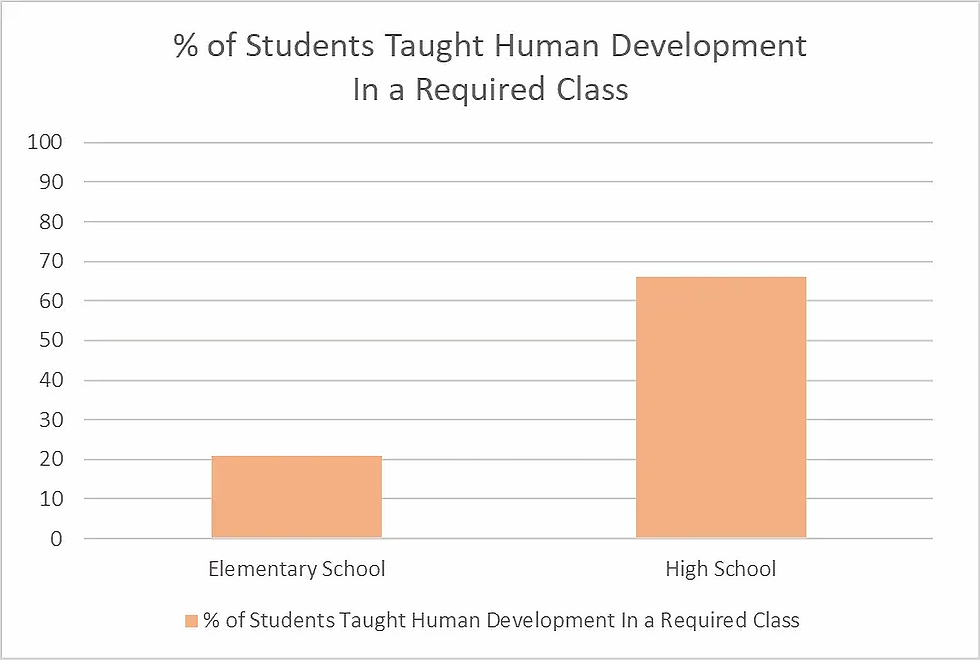
Second: do we talk about it? What use is all of this knowledge if we cannot share it? Studies show that families often still do not engage in conversations surrounding puberty and menstruation in the home, although according to a study conducted by the CDC, 66% of high schools and 21% of elementary schools taught human development, including puberty, in a required class. There also aren’t any federal requirements in the US for health or sexual education curricula, meaning that schools may choose to teach whatever they want, whenever they want- it doesn’t even legally have to be true, timely, or helpful! In the case of Alabama, there is no state law or released guidelines for public schools to follow when designing a timeline for communicating information about puberty or periods. Alabama’s own students have expressed that they “wish the school would give us more chances to learn.” So if the knowledge isn’t coming from the home, and it isn’t coming from school, where is it coming from?
According to Evelina Sterling, a public health consultant and president elect of the Society for Menstrual Cycle Research, period product companies with vested interests in selling their products have claimed to provide period education to over 200,000 schools, meaning these curricula may be “more marketing strategy than evidence-based”. And social media of course plays a large role in the information communicated to children about every subject. It’s more than reasonable to assume that they may be learning much of what they know about their bodies and their menstrual cycle not from reputable sources, schools, or adults, but rather from social media or their peers.
1. Know about it. 2. Talk about it. 3. Advocate for it.
Maybe this is all beginning to sound a bit hopeless. But encouraging schools and the government to provide age-appropriate, accurate health information is a great first step towards providing young people what they need to navigate the messy journey that is getting your period. Parents, reach out to your local school board or health educators to find out which topics will be discussed and at what age your child will learn about their body so you can provide additional at-home support. Educators can also help improve the curriculum by knowing what level of knowledge students possess- through a survey, community meetings, or a pre-set curriculum with objective success measures.
According to the data, small group or peer teaching combined with hands-on interactive learning, trumps lecture and Q&A any day of the week, and encouraging schools to pursue these methods or using them in your own home creates space for dialogue and accurate information sharing in a way that will stick. These professionals emphasize that “girls need an enabling environment as well as knowledge”, and that drawing males and even parents into the educational process is crucial to create a supportive environment outside of the school setting for those who menstruate. Our girls deserve better than we grew up with. So remember, first: Know about it. Second: Talk about it. Third: Advocate for it. These steps may seem simple, but they are the crucial first steps toward raising a happier, healthier generation.


Comments